Turn attention into a known contact.

4 things you can make for this, each composed from what your organization already knows and rendered in your brand.

01Why this one is hard

Attention you cannot follow up is attention you paid for and threw away. The job here is small and specific: give someone a reason to tell you who they are, and make it easy.

02What you can make
Consultation booking

An invitation to book a call or consultation: the value of the conversation and how to schedule it.

Web page

Contact / inquiry

A clear way for people to get in touch: what you help with and a simple way to reach you.

Web page

Event registration

A page to register for an event: the essentials, the program, and one clear way to reserve a place.

Web page

Sign-up (offering/waitlist)

A page that invites people to sign up for an offering, a waitlist, or a service, with a simple form.

Web page
03How you get there
  1. Choose what you are offering: a page, a form, an invitation to something.
  2. Set the one action you want. A page asking for two things gets neither.
  3. Gyrium composes the page from what you know, in your brand, with the form built into it.
  4. Say where responses should land, so somebody is told when one arrives.
  5. Publish it. Responses collect in one place, ready to be followed up.
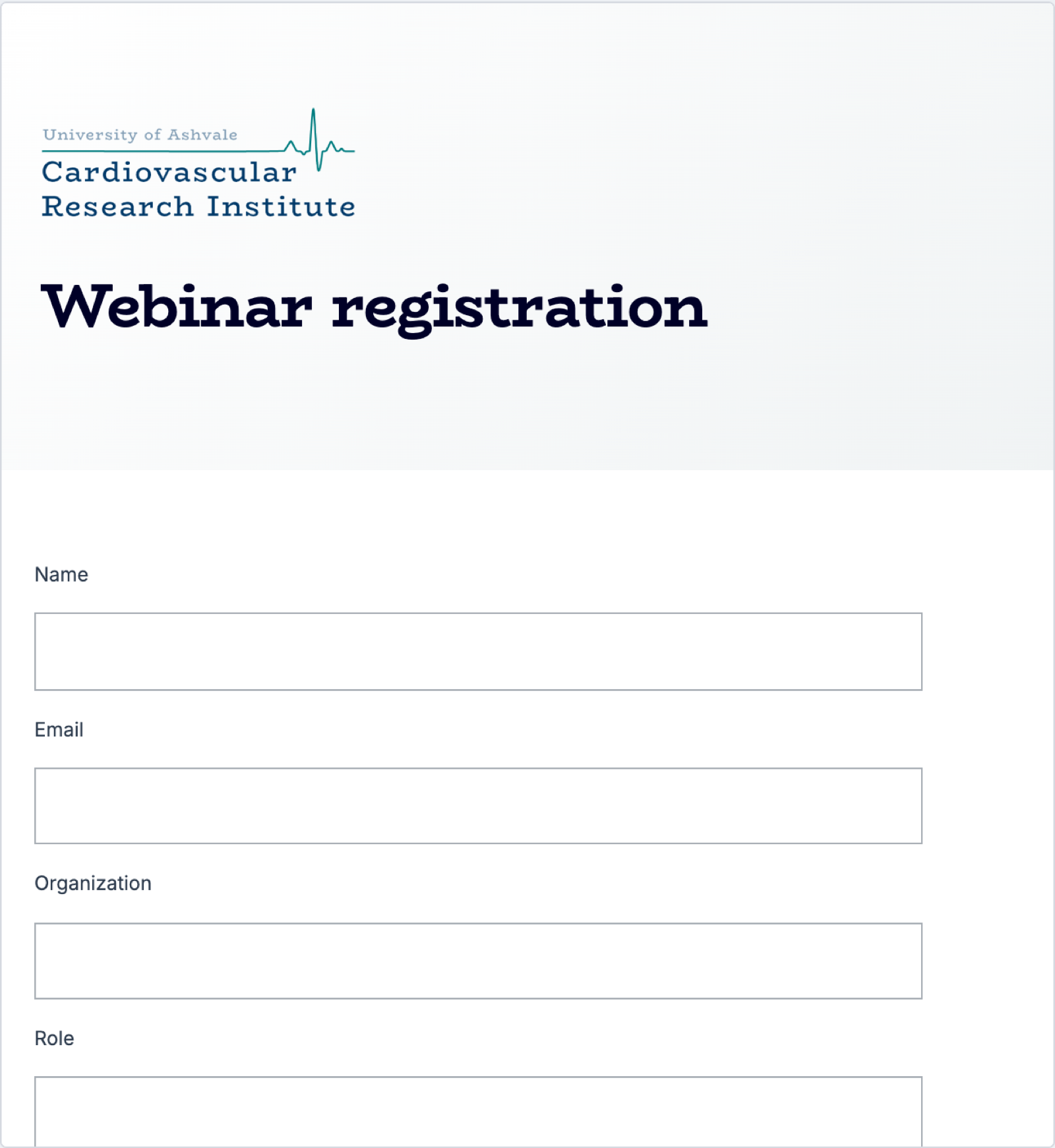
A webinar registration form in the institute's brand.
A form · a webinar registration Open it Demo: a fictional cardiovascular research institute, with simulated figures.
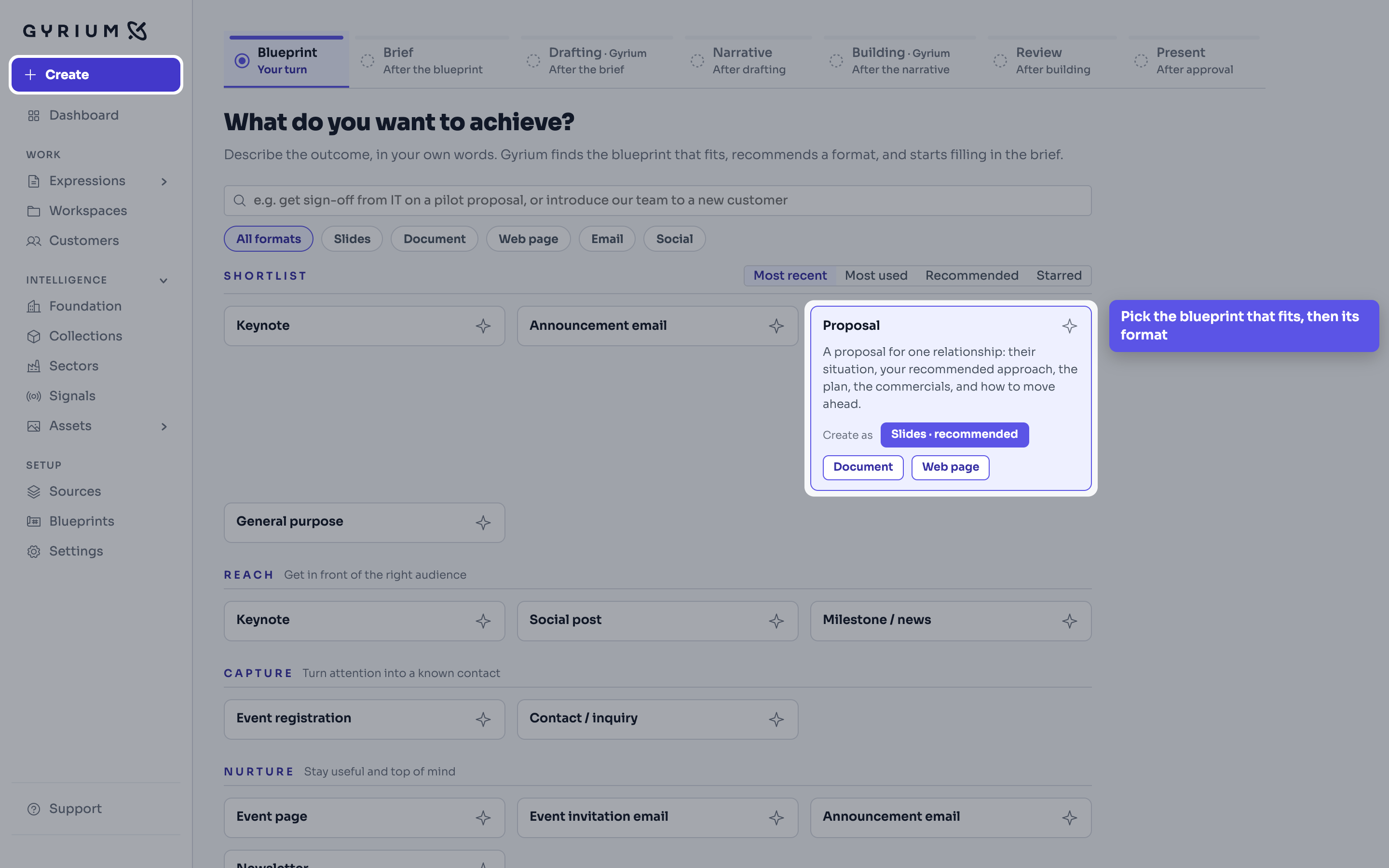
%sCreate, asking What do you want to achieve. The Proposal blueprint is picked out, with Slides recommended, Document and Web page. The Create button in the menu is highlighted. The callout reads: Pick the blueprint that fits, then its format.
Step 1Create · Choosing a blueprintDemo: a fictional cardiovascular research institute, with simulated figures.
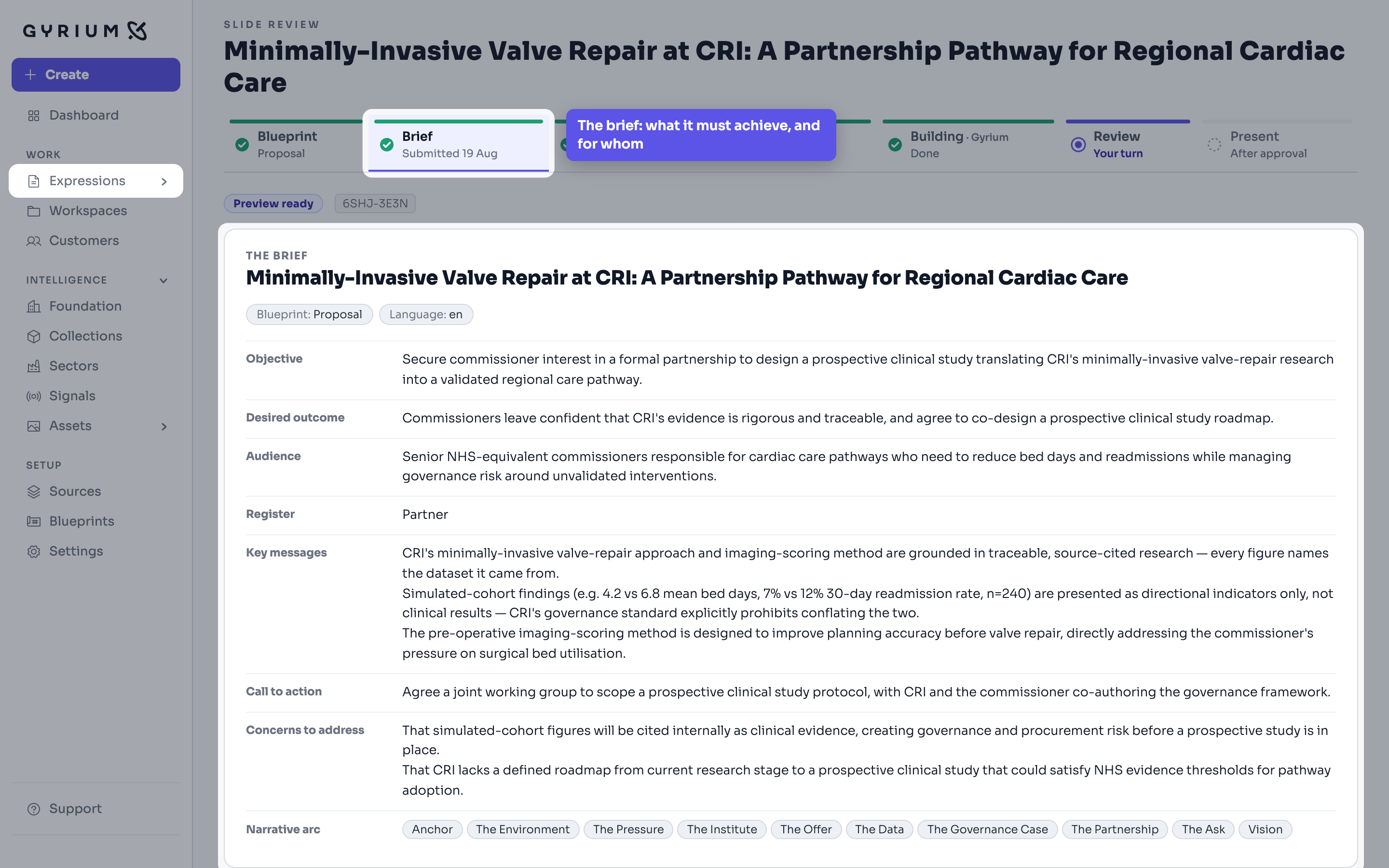
%sA deck's brief: objective, desired outcome, audience, register, key messages, call to action, concerns and narrative arc. The Brief step of the process bar is picked out. The callout reads: The brief: what it must achieve, and for whom.
Step 2A deck, Brief · The briefDemo: a fictional cardiovascular research institute, with simulated figures.
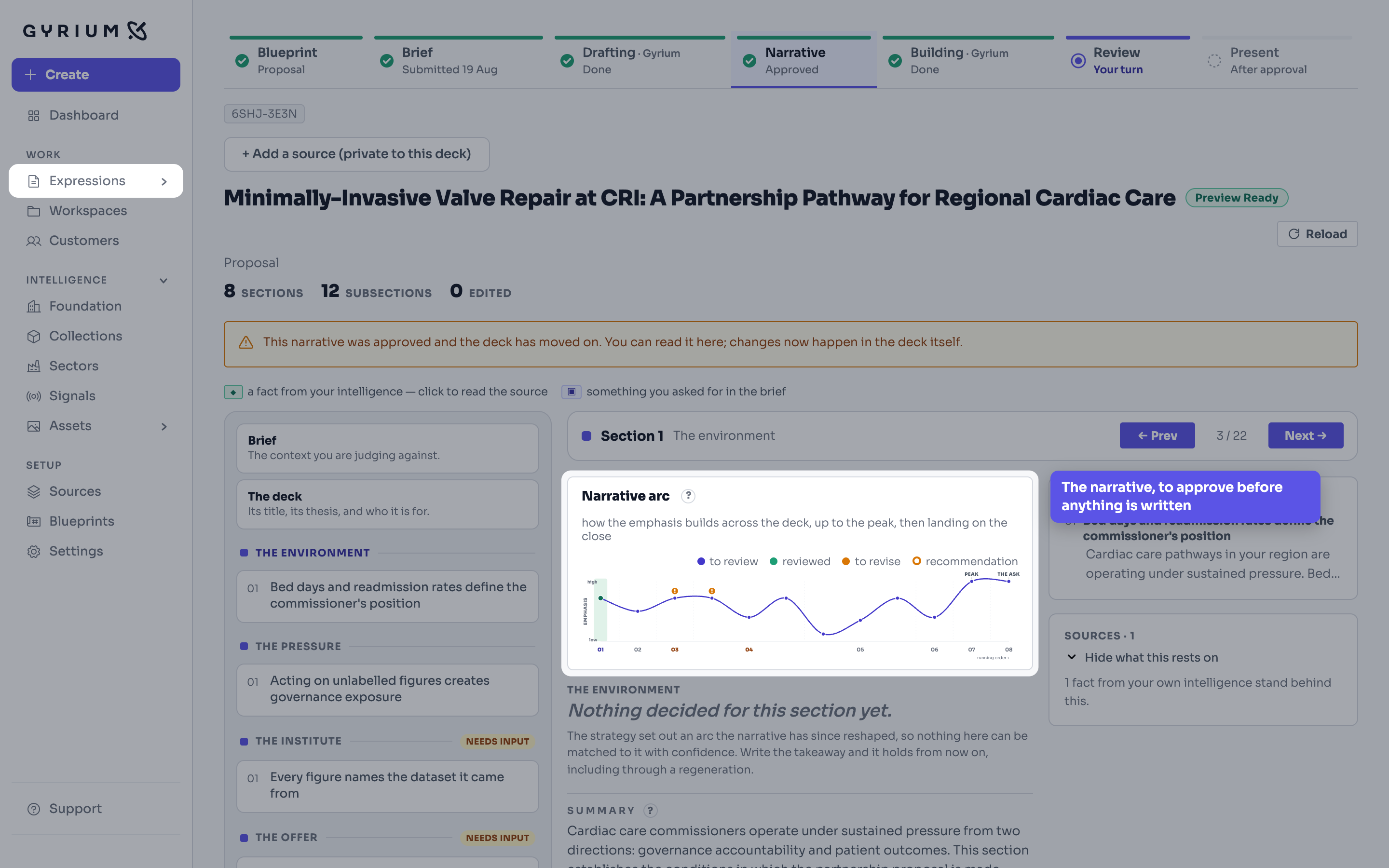
%sThe deck's narrative, section by section. The Narrative arc chart is picked out. The callout reads: The narrative, to approve before anything is written.
Step 3A deck, Narrative · The narrativeDemo: a fictional cardiovascular research institute, with simulated figures.
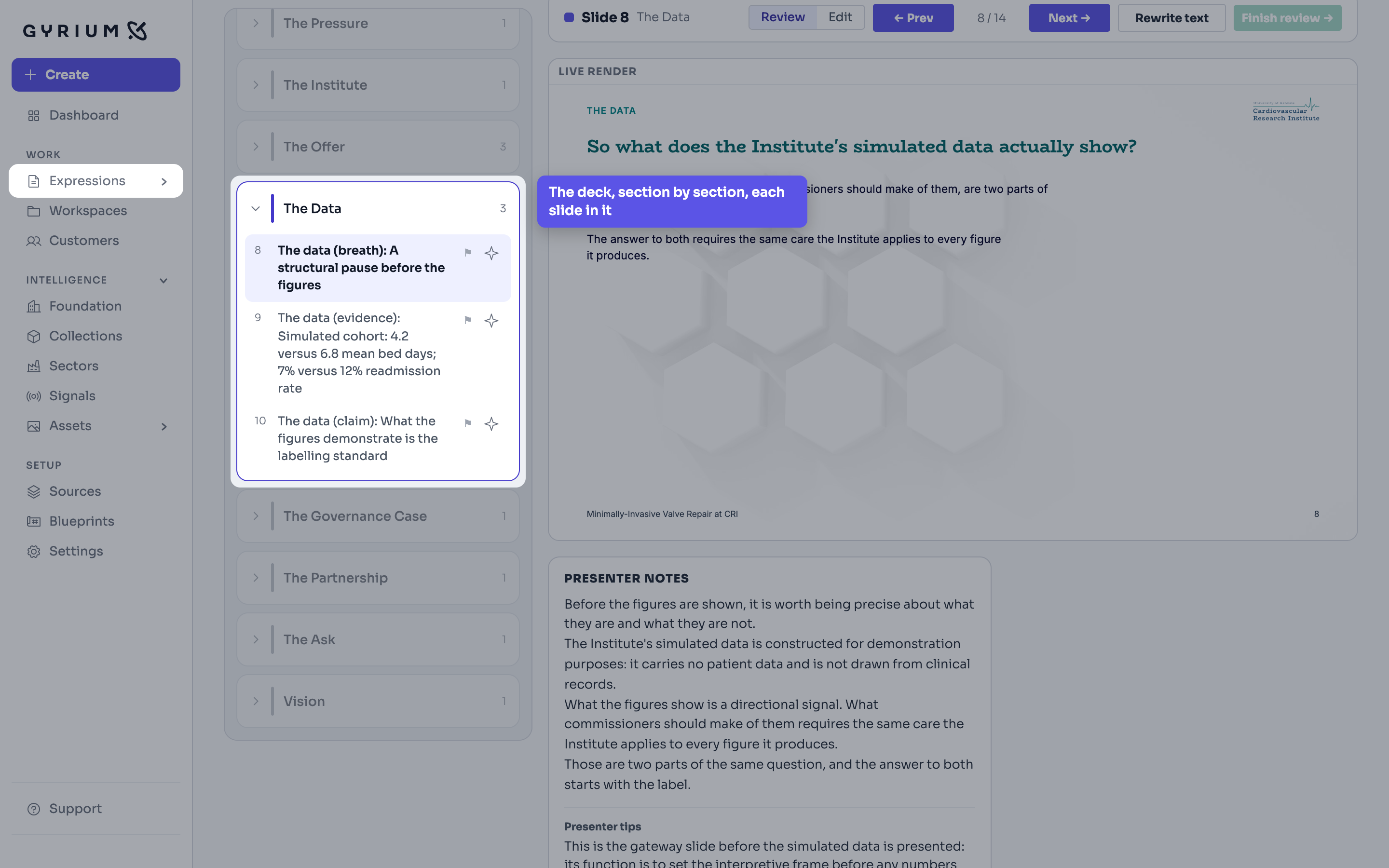
%sThe deck in review, with the section The Data opened and picked out, listing its three slides. The callout reads: The deck, section by section, each slide in it.
Step 4A deck, Review · The deck, section by sectionDemo: a fictional cardiovascular research institute, with simulated figures.
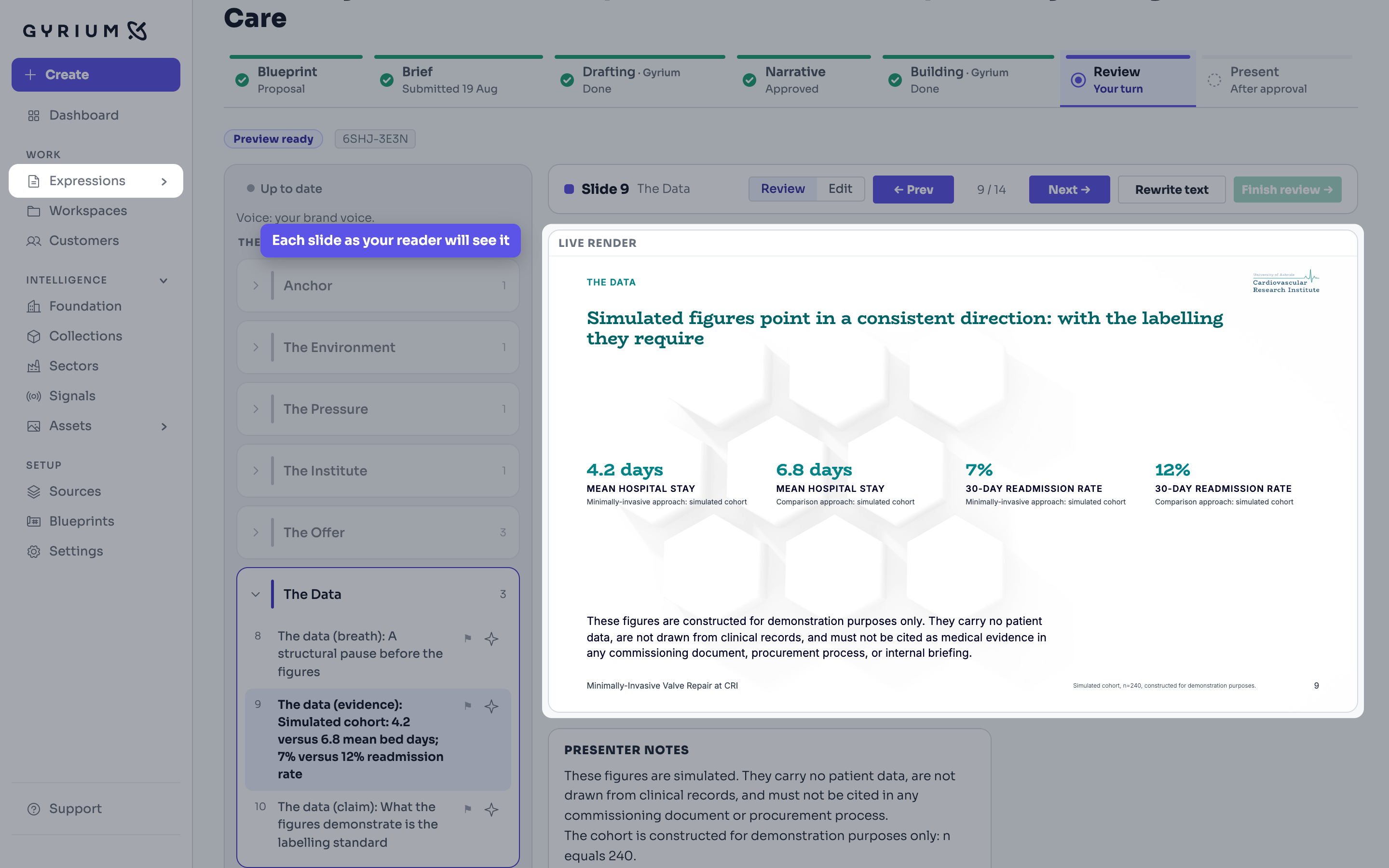
%sThe deck in review on slide 9. The live render of the slide is picked out, with four figures labelled as a simulated cohort. The callout reads: Each slide as your reader will see it.
Step 5A deck, Review, one slide · One slide in reviewDemo: a fictional cardiovascular research institute, with simulated figures.
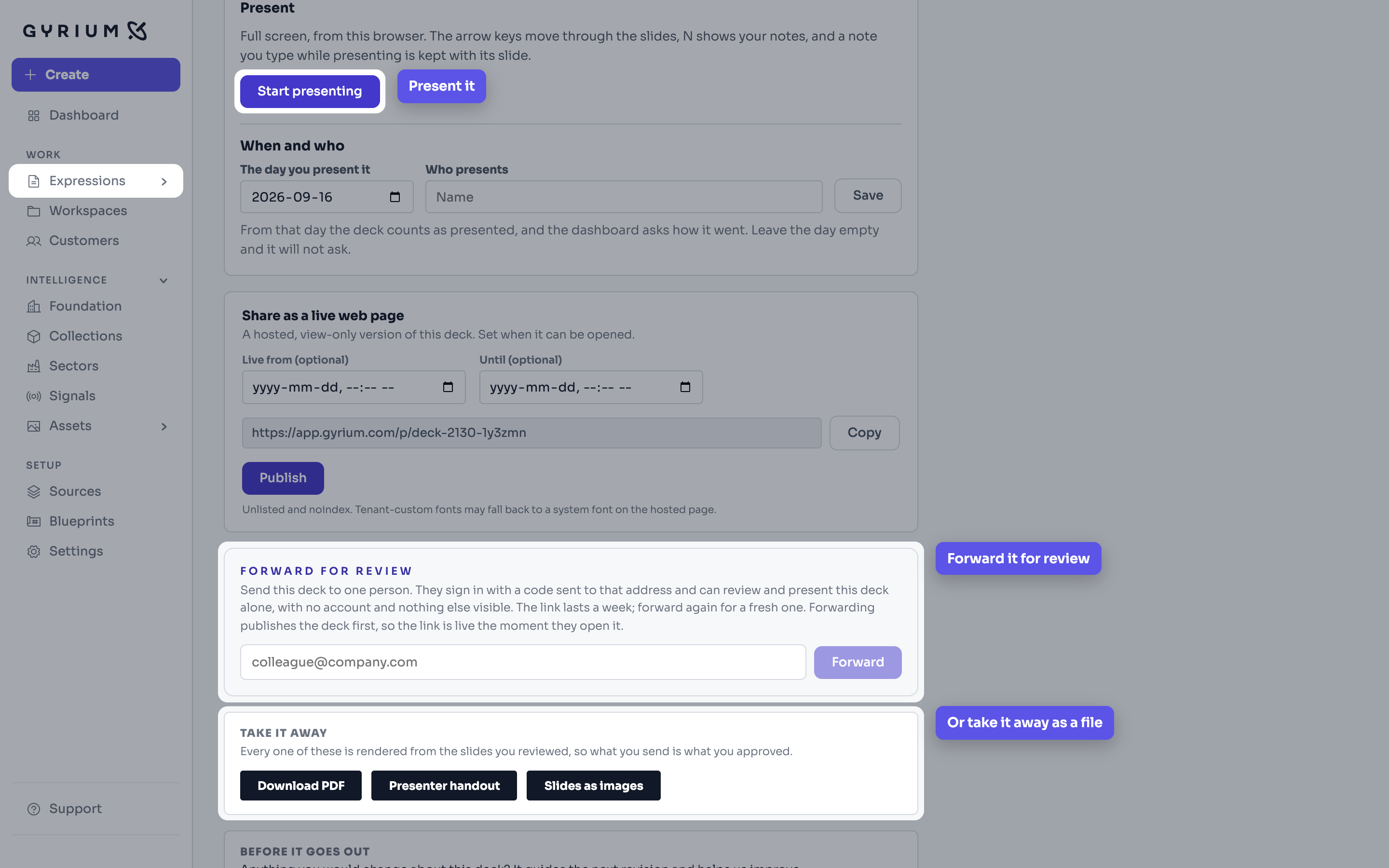
%sThe last step of an approved deck. Three parts are picked out: Start presenting, with the callout Present it; Forward for review, with the callout Forward it for review; and Take it away, with the callout Or take it away as a file.
Step 6A deck, Present · Present, forward, or take it awayDemo: a fictional cardiovascular research institute, with simulated figures.
What this draws on

See it hold your own work.

The pilot takes a small number of organizations at a time. Bring what you already have.