Campaign recap
The story of a campaign after it ran: what you set out to do, what happened, and what it delivered.
Slides · Document · Web page
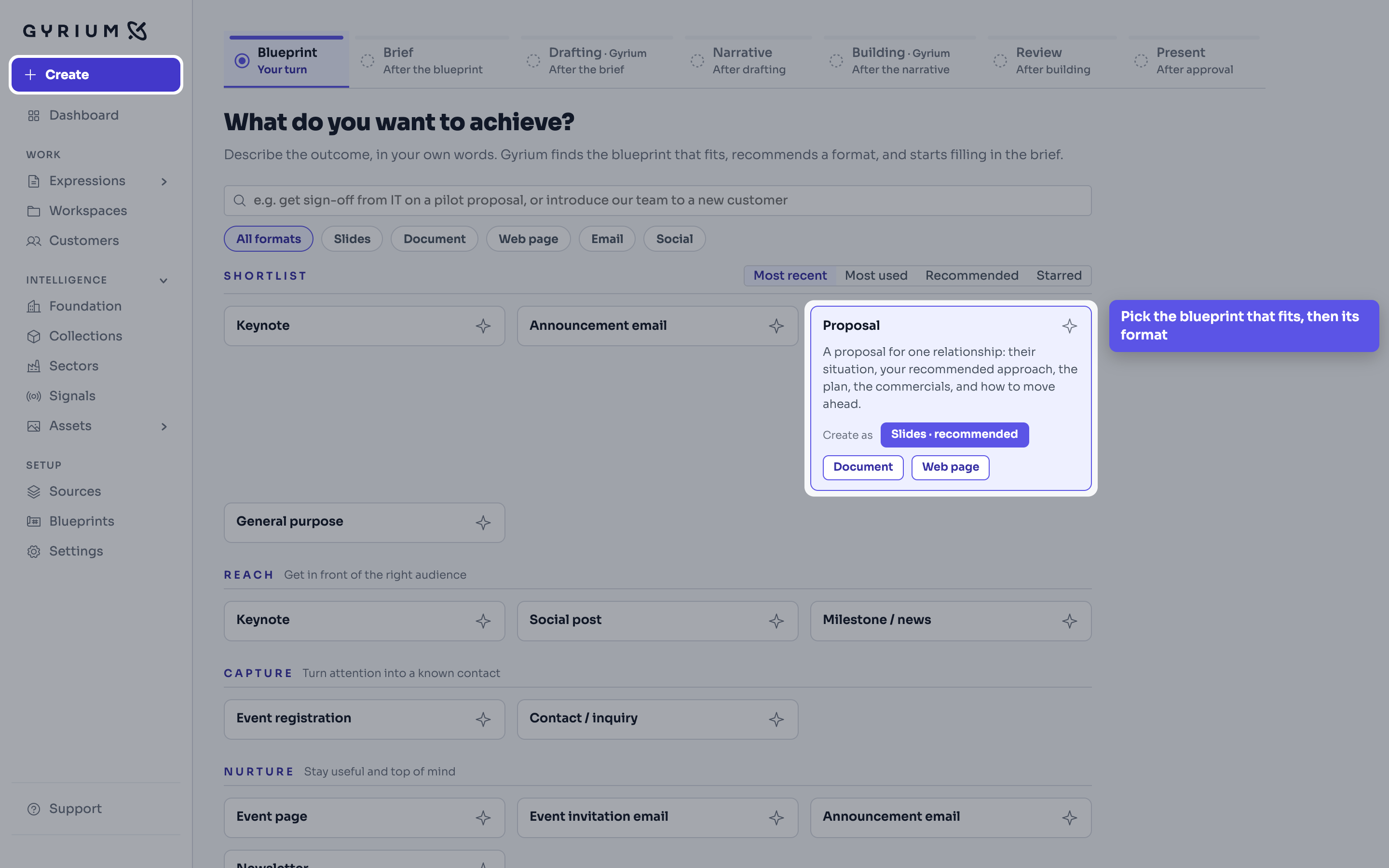
15 things you can make for this, each composed from what your organization already knows and rendered in your brand.
Authority is the slowest thing to build and the quickest to lose, and it turns entirely on whether the claims hold. One number nobody can source undoes a good piece of work.
The story of a campaign after it ran: what you set out to do, what happened, and what it delivered.
Slides · Document · Web page
One client story told in full: the challenge, the approach, and the results that followed.
Slides · Document · Web page
A clear account of who you are: what you do, who you serve, and why you can be trusted.
Web page
A rounded company overview: who it is, what it does, who it serves, its track record, and where it is going.
The creative concept for client sign-off: the big idea, the audience experience, why it delivers on the brief, and the path to production.
Slides
The essentials on one page: the facts, figures, and specifics people need to decide.
Web page
A report for a funder: the outcomes achieved against the commitment, told with evidence.
Document · Slides
A step-by-step guide that helps someone get a result, written in your voice.
Document · Web page
A human story of impact: one change your work made, told through the people it reached.
Document · Web page · Slides
A rich overview of a product or service: what it is, who it helps, and why it stands out.
Document · Web page
A company, product or person at a glance: what it is, what sets it apart, the figures that show it, and how to get in touch. Usually one page.
Document
A home for your published work: guides, reports, and resources, organized to explore.
Web page
A structured report from your own intelligence: an annual, impact, or research read with the findings up front.
Document · Slides
Proof in your customers' own words: the result they got and why they would recommend you.
Social · Web page
Long-form authority on a topic you know deeply: the context, the evidence, and what it means for the reader.
Document
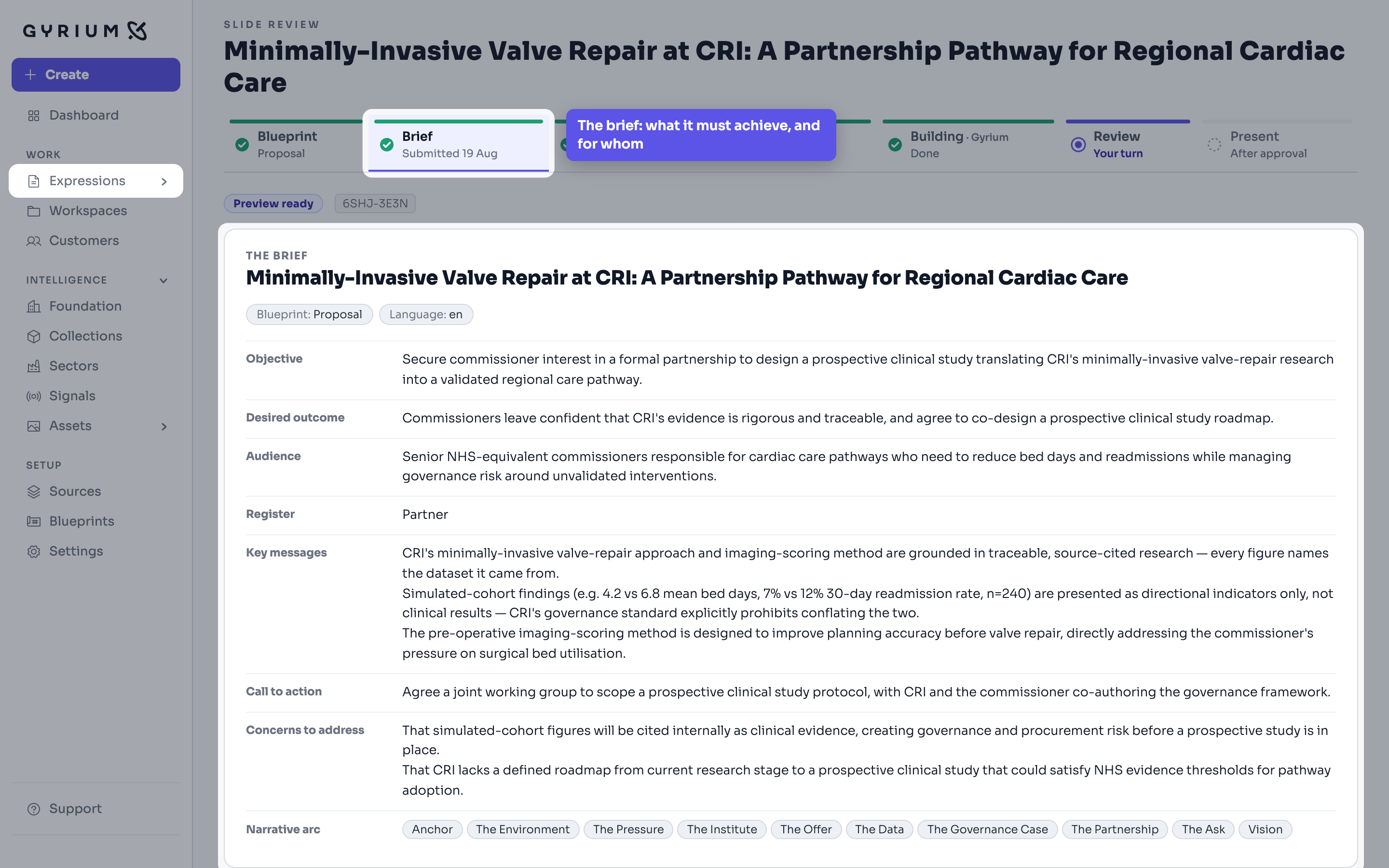
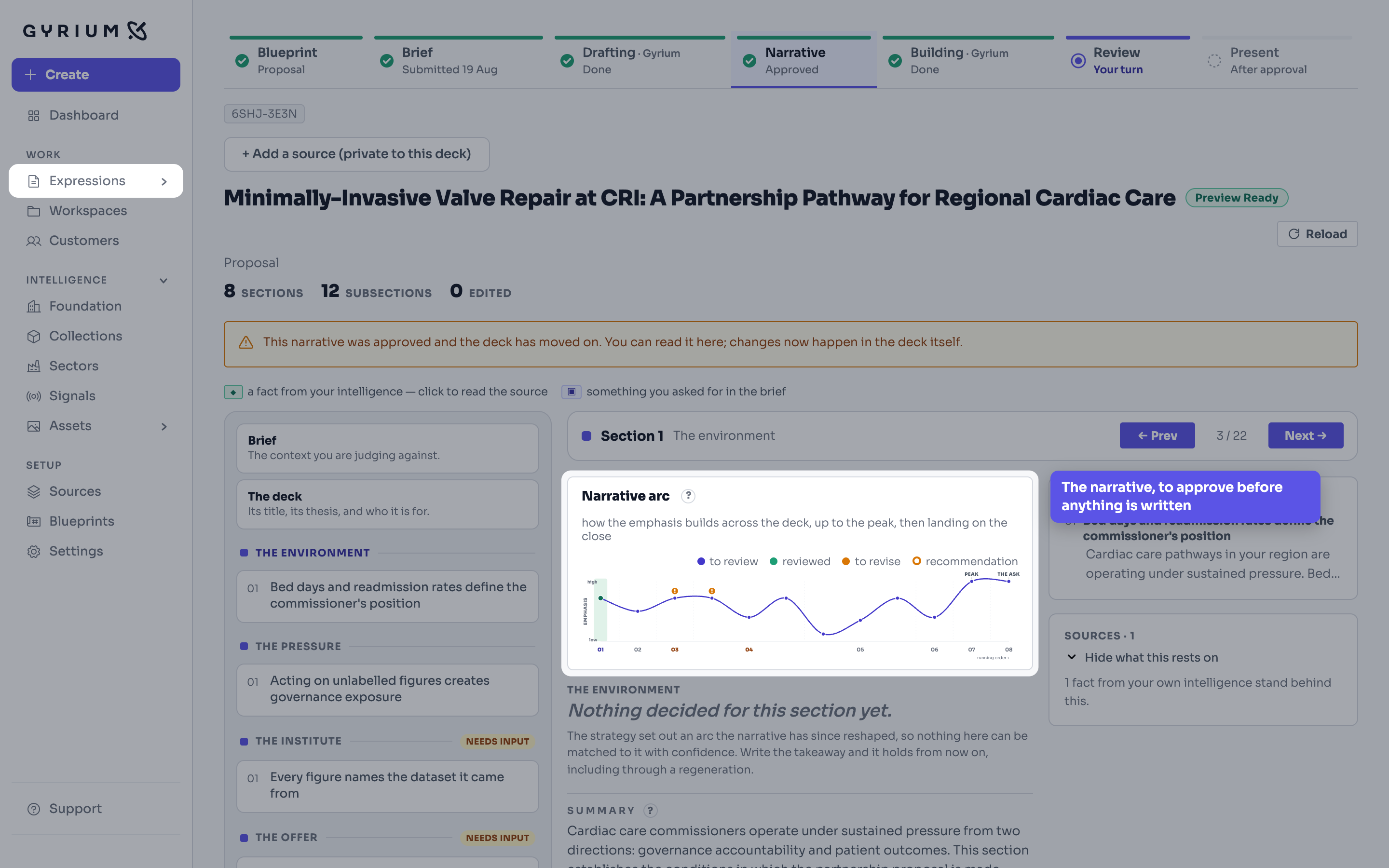
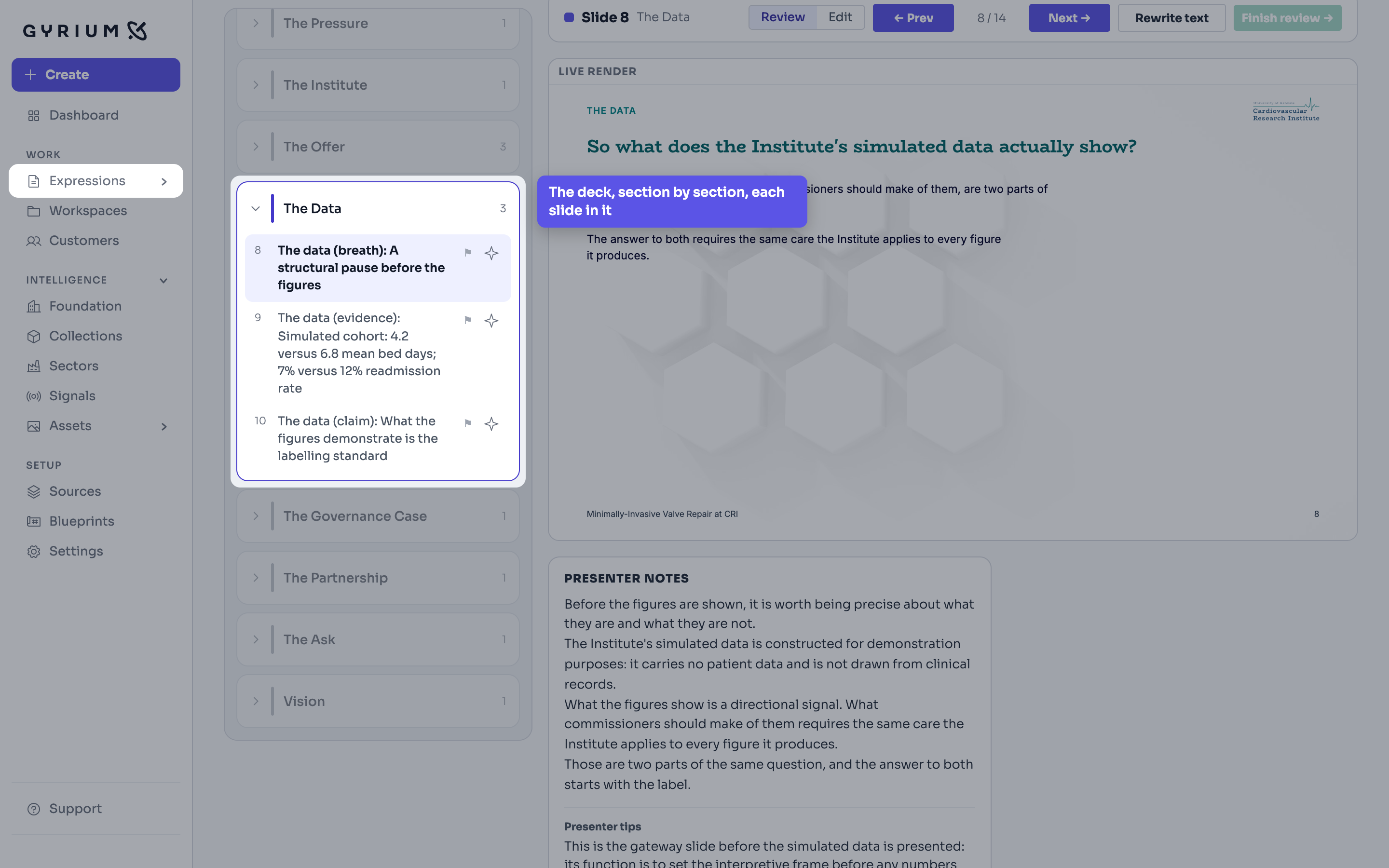
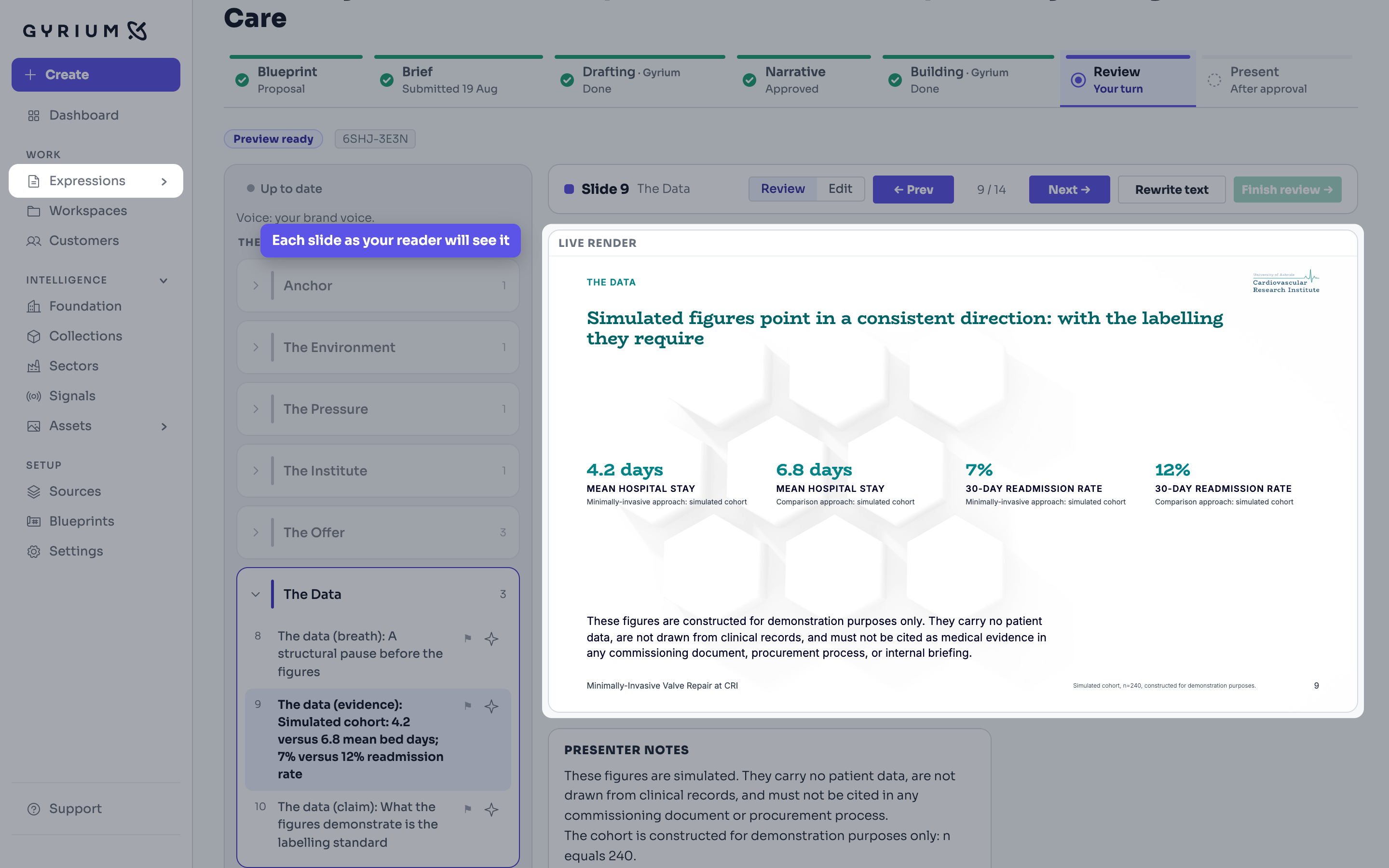
The memory of your organization. Everything it knows, captured as sourced facts, structured by a curated taxonomy, and available to everything you make.
One source of truth. Sourced, isolated, approved, versioned, exportable, and owned by the customer.
A spreadsheet stays a spreadsheet. Gyrium reads it, understands its units, and states what it says, without shredding the grid into loose facts.
Turn a spreadsheet into a branded, accessible chart, ready to place in a deck or a report.
The pilot takes a small number of organizations at a time. Bring what you already have.