01Why it is worth doing
Tone is the thing readers notice without being able to name it. Written down once, it stops living in the head of whoever writes best.
02How you get there
- Not sure how to put it into words? Run the personality wizard. Five questions: how the brand would talk if it walked into a room, three words customers should use about you and three they never should, what a reader should feel, one or two brands whose voice you admire, and where you sit between buttoned-up and warm. From your answers it drafts the traits, the words to avoid, the feeling to leave, the tone notes and your brand archetype, written in your organization's language. Every line stays editable, and if a draft does not come out, your answers are kept for another try.
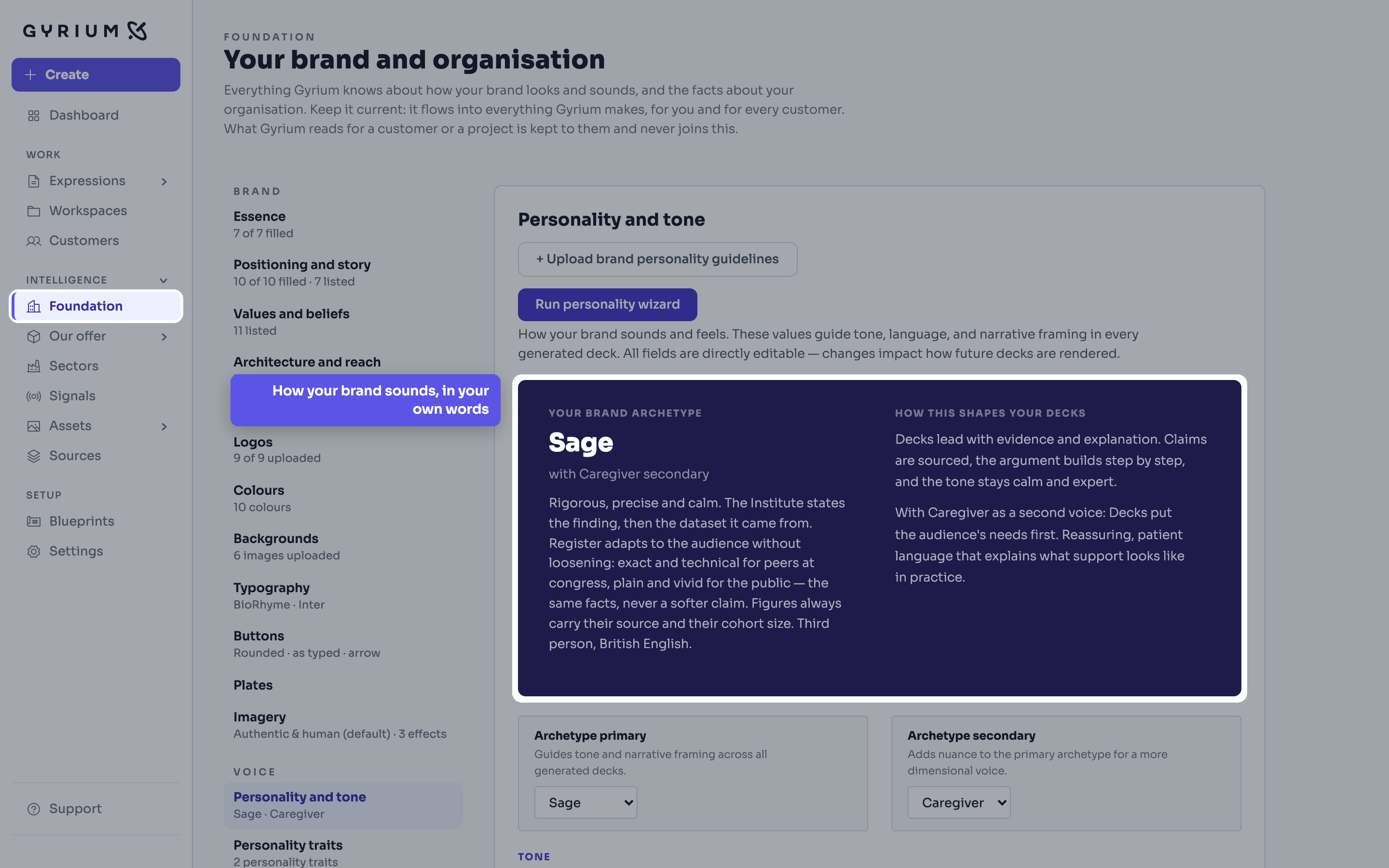
- Choose your brand archetype: a main one from twelve, such as Sage or Caregiver, and a second one for nuance. Beside it, Gyrium says what that choice asks of every deck.
- Describe how your brand sounds, in your own words.
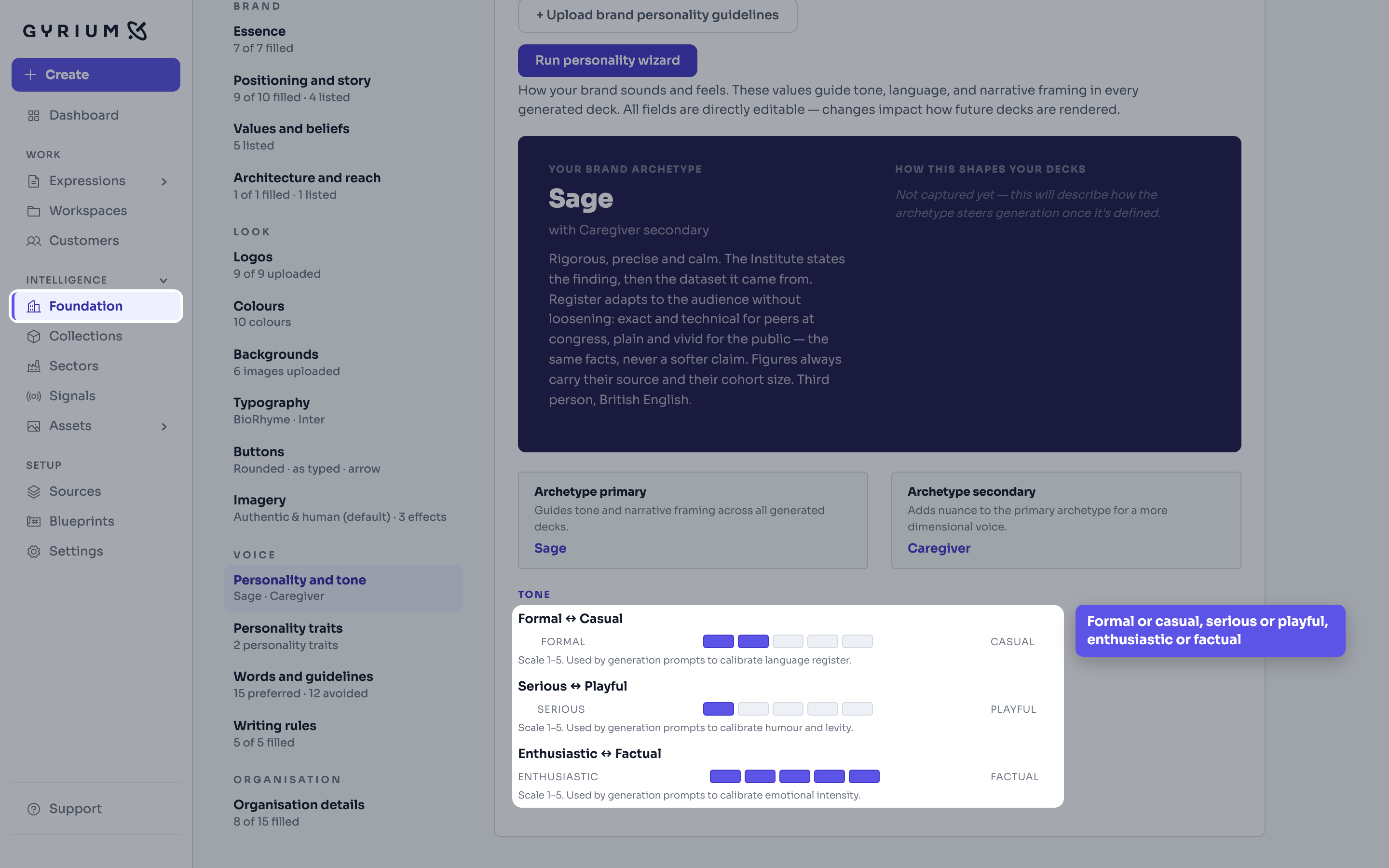
- Set the voice characteristics: formal or casual, serious or playful, enthusiastic or factual.
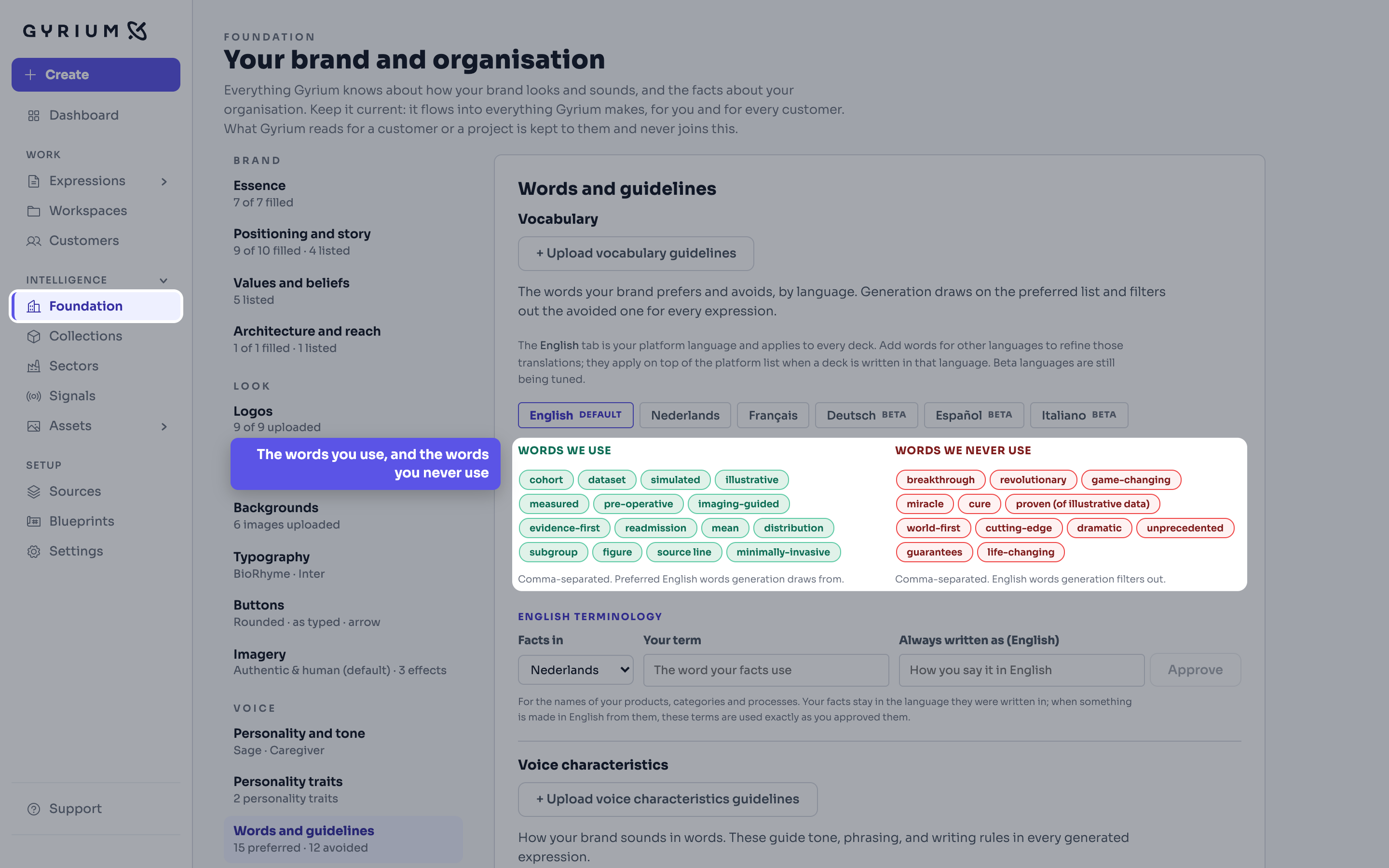
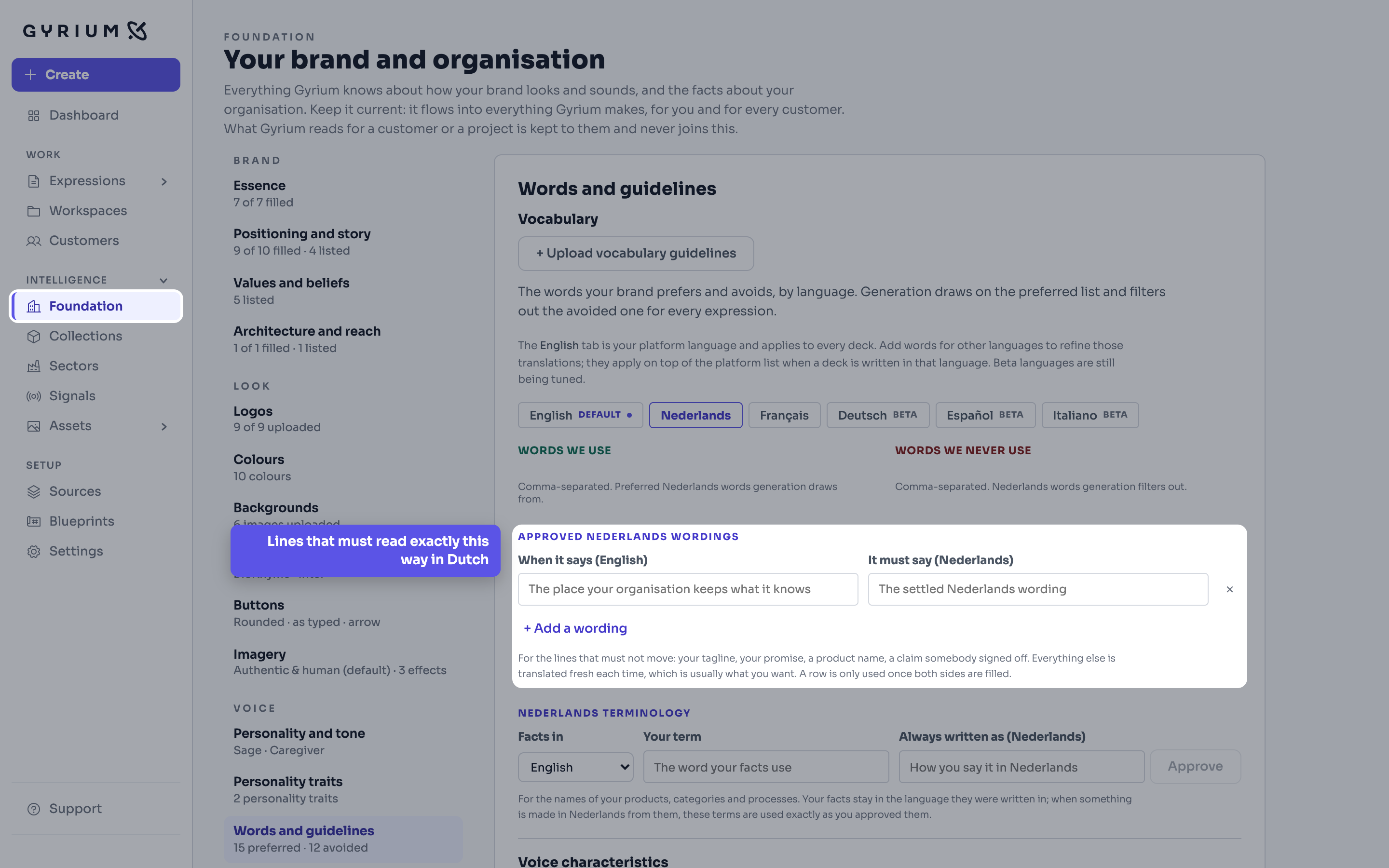
- List the words you use, and the words you never use. Every deck, document, web page, email and social post is checked against that list, in every language you keep one for. A social post that still uses one of those words cannot be marked ready or posted until the line is edited.
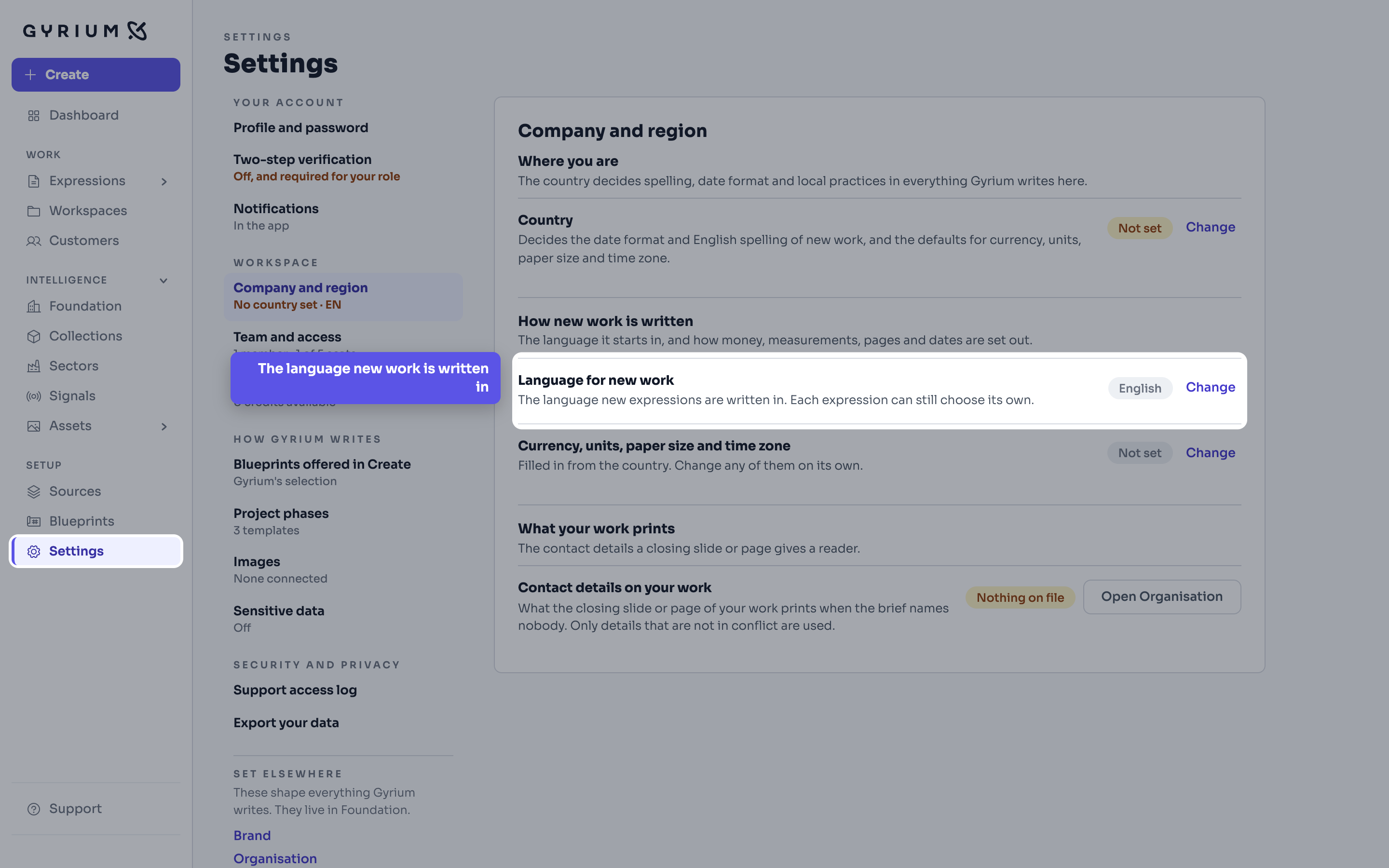
- Choose the language the work is written in.
- Settle the lines that must not move in translation: a tagline, a brand promise, a product name, a claim someone signed off. Every piece in that language reproduces your approved wording character for character.
- Keep a terminology table for each language: the words of your trade, and the word to use for each. Saving a pair approves it, and every piece in that language uses your word.
- Everything you make is written in that voice, so nobody spends their evening editing it back into your tone.
What this uses
Brand System & Render Engine
It doesn't export, it renders. Everything you make is assembled from your knowledge and rendered in your design system, element by element.
Strategic Composition
Strategy before words. Gyrium sets the objective, the narrative, and the structure before it composes, grounded in your intelligence base.
Personas
Who you are talking to, as an audience and the people inside it, held as part of your intelligence so strategy is set against someone real.