Application presentation
Show engineers at one customer's site which of your offerings fit the applications they run, and why each holds up there: the conditions, a solution per application, the proof, and one next step.
19 things you can make for this, each composed from what your organization already knows and rendered in your brand.
This is the work that is checked most closely and written in the least time, usually at night, usually by whoever is most senior. The cost of a mistake is the deal, so everything here is composed from your facts, and anything that cannot be sourced is flagged.
Show engineers at one customer's site which of your offerings fit the applications they run, and why each holds up there: the conditions, a solution per application, the proof, and one next step.
A focused page for one campaign or offer: the hook, the value, the proof, and one clear action.
Web page
What we do and why we're credible: capability, proof, differentiation.
A web page addressed to one relationship you select: a personal welcome, the value for them, the proof that fits their situation, and a clear next step. Composed for the customer on the brief.
Web page
The shortest possible ask: one strong reason to take the firm seriously and a clear next step.
Investor-facing pitch: opportunity, thesis, returns, the ask.
A single web page composed from your own intelligence: a hero, the value, how it works, proof, an FAQ, and a call to action, with an optional lead form.
Web page
What you leave after a meeting: what was discussed, what you offer and what happens next, readable by someone who was not in the room. Usually one page.
Document
Fundraising or investor pitch: problem, solution, market, traction, team, the ask.
Present a selection of your products or services, one section each: what it is, its figures, who it is for, and its own pictures, side by side.
Your offering at a glance: what is included and what it costs, laid out to compare.
Web page
Introduce one product, service or range to a buying audience: the conditions it lives in, what it is, how it is built or delivered to answer them, the proof, and where it fits.
A page for a single product or service: what it is, who it helps, how it works, the proof, and how to get started.
Web page
Proposed project: objectives, approach, plan, team, commercials.
A proposal for one relationship: their situation, your recommended approach, the plan, the commercials, and how to move ahead.
Slides · Document · Web page
A proposal composed as a web page for one relationship: their situation, the recommended approach, the plan, the commercials, and how to move ahead.
Web page
Structured response to a request for proposal: approach, capability, evidence, commercials.
Persuasive sales narrative tuned to a specific customer and opportunity.
Turn a technical white paper into a prospect-specific pitch: the paper's authority, narrowed to one customer's industry and situation, closing on a recommended product range and a next step.
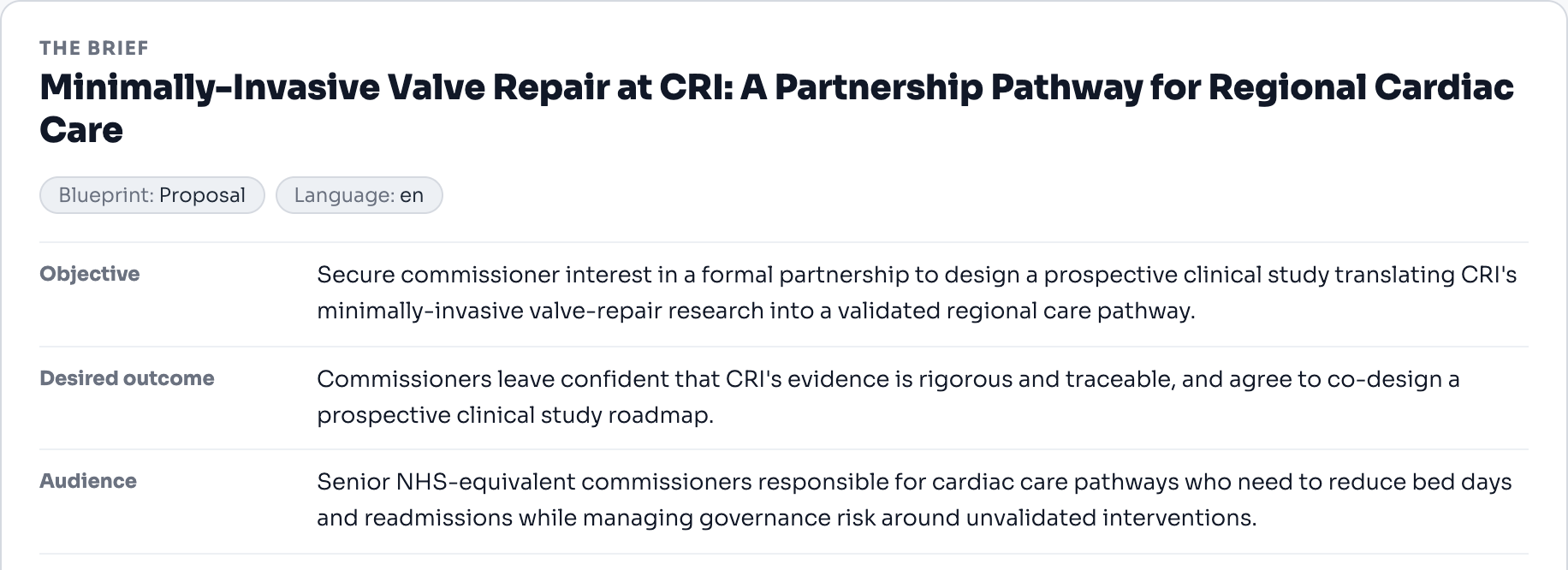
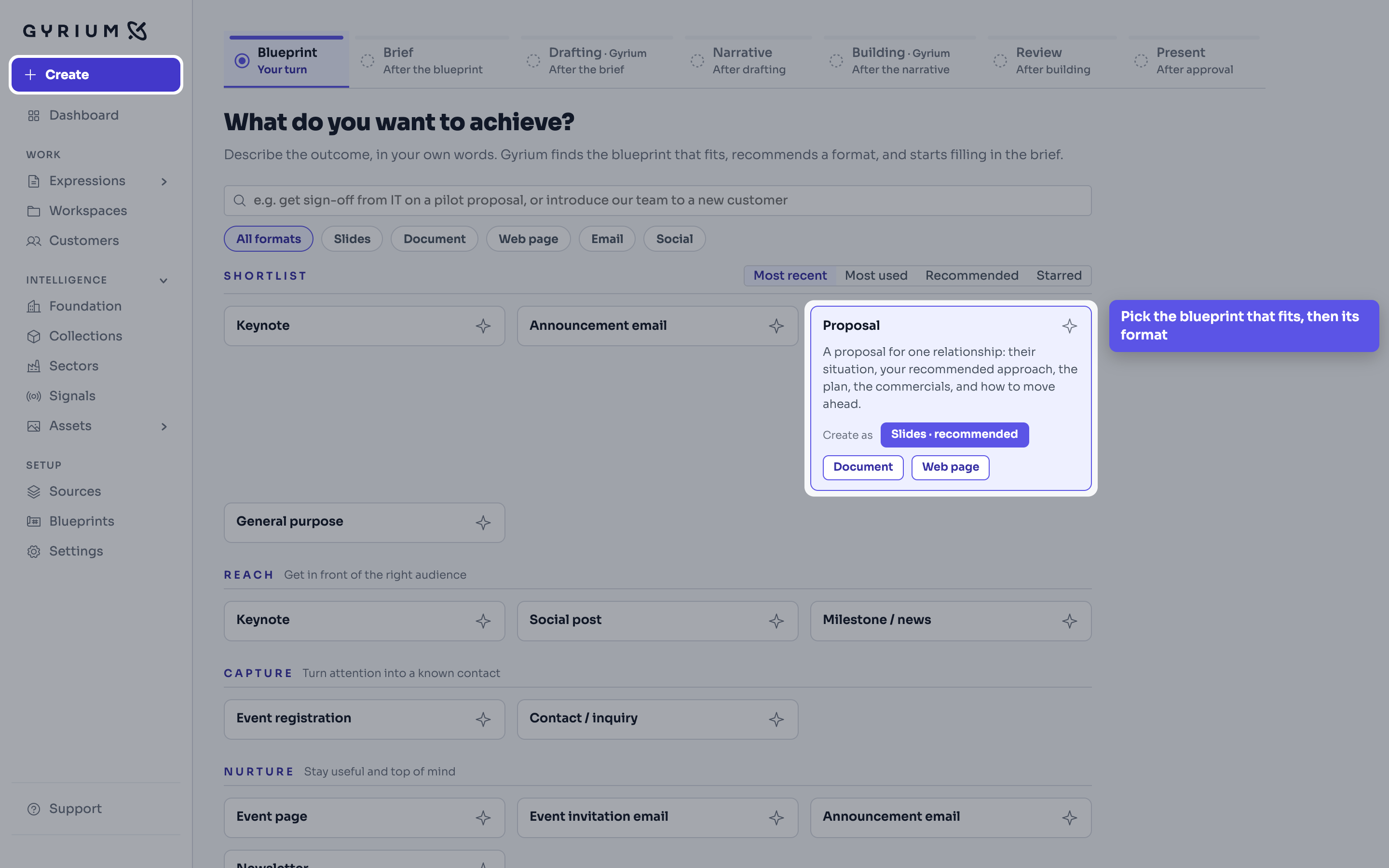
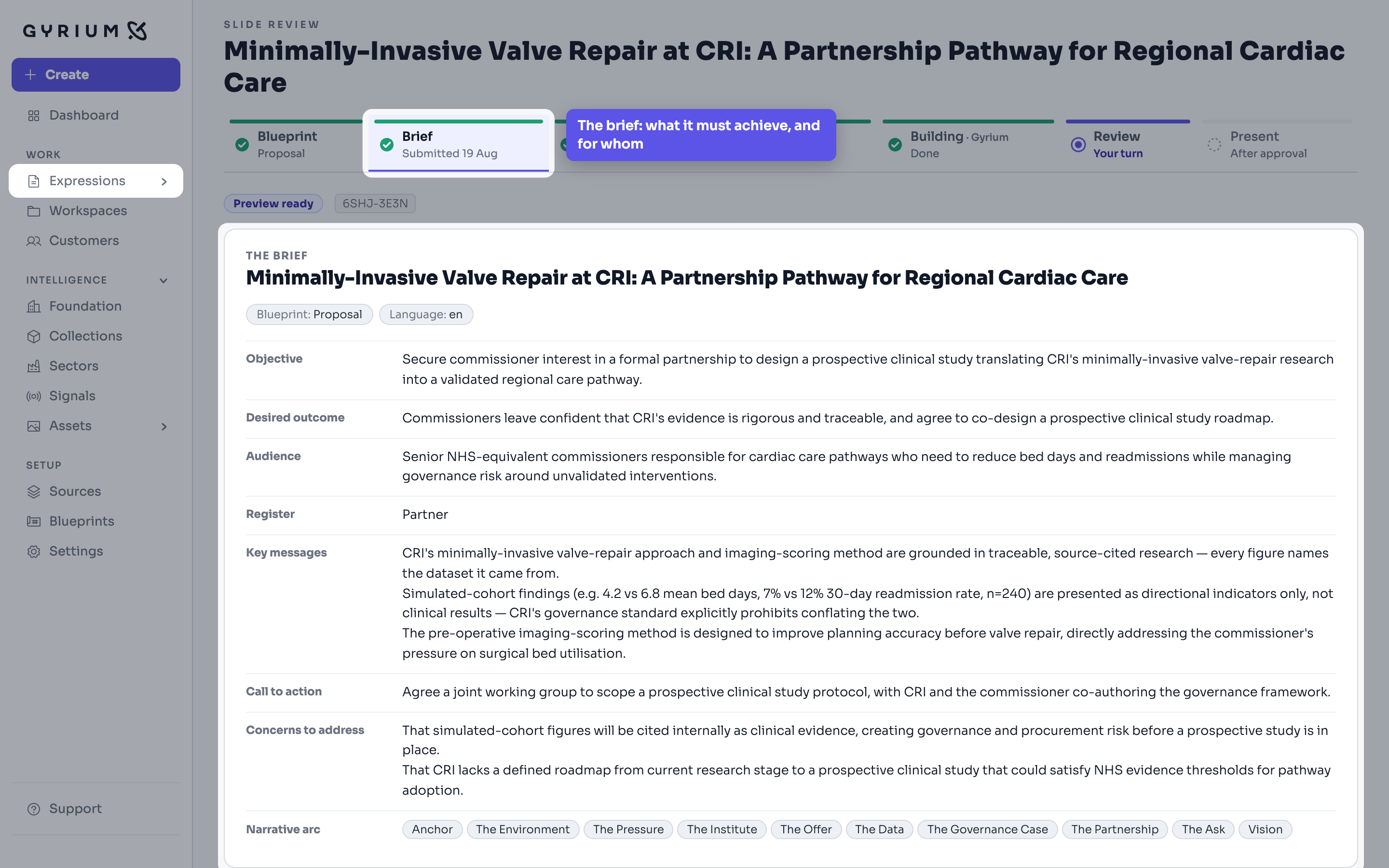
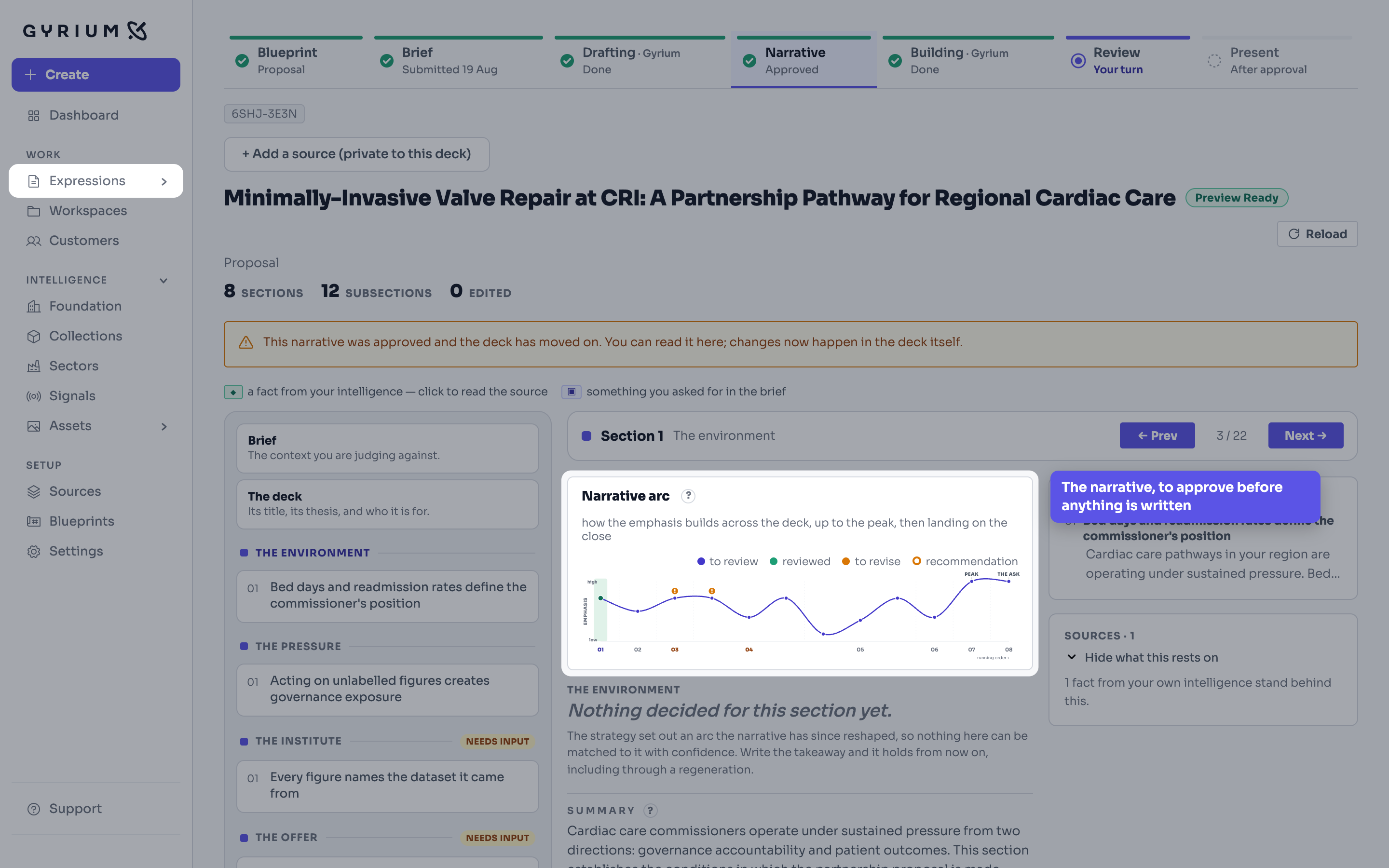
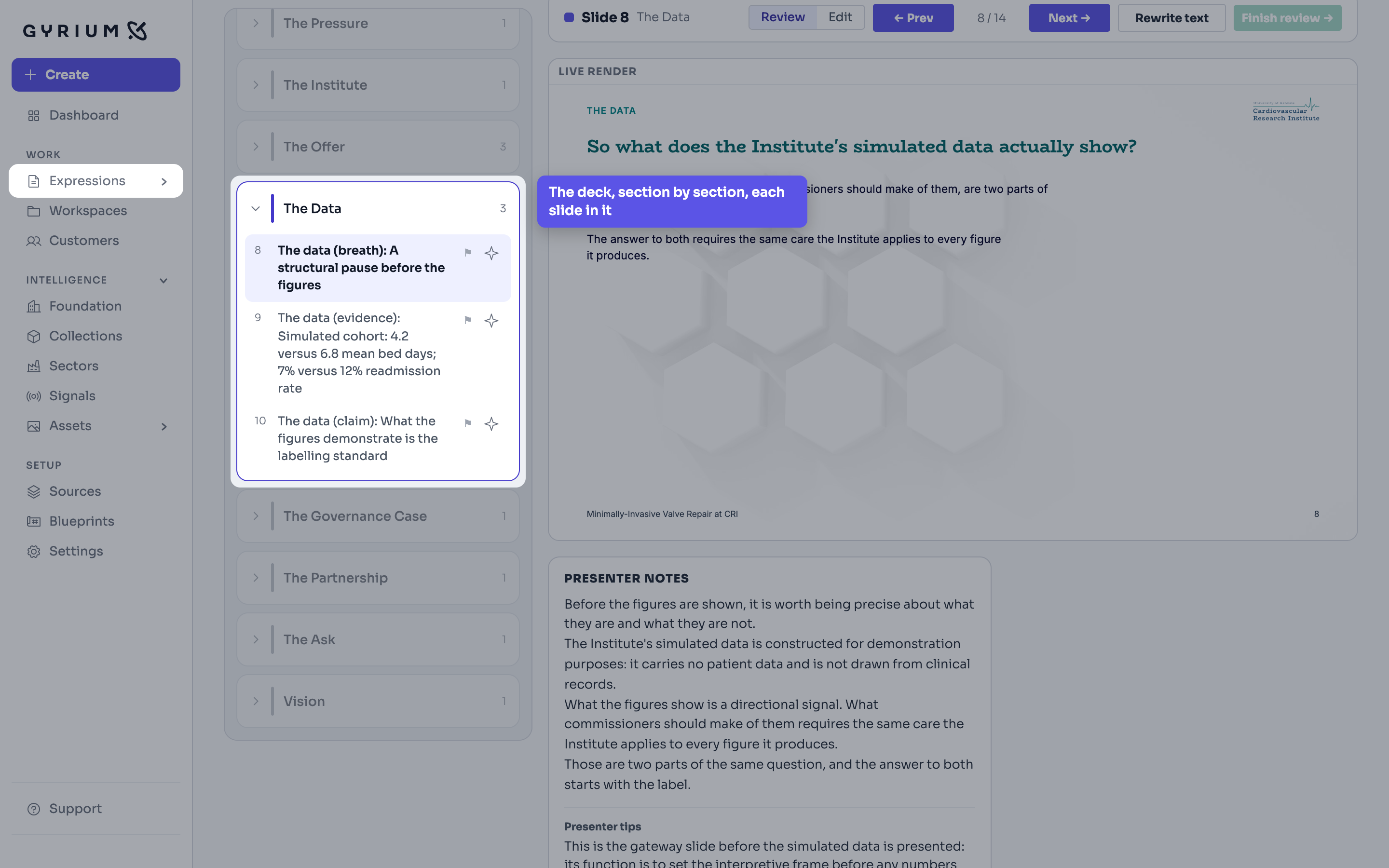
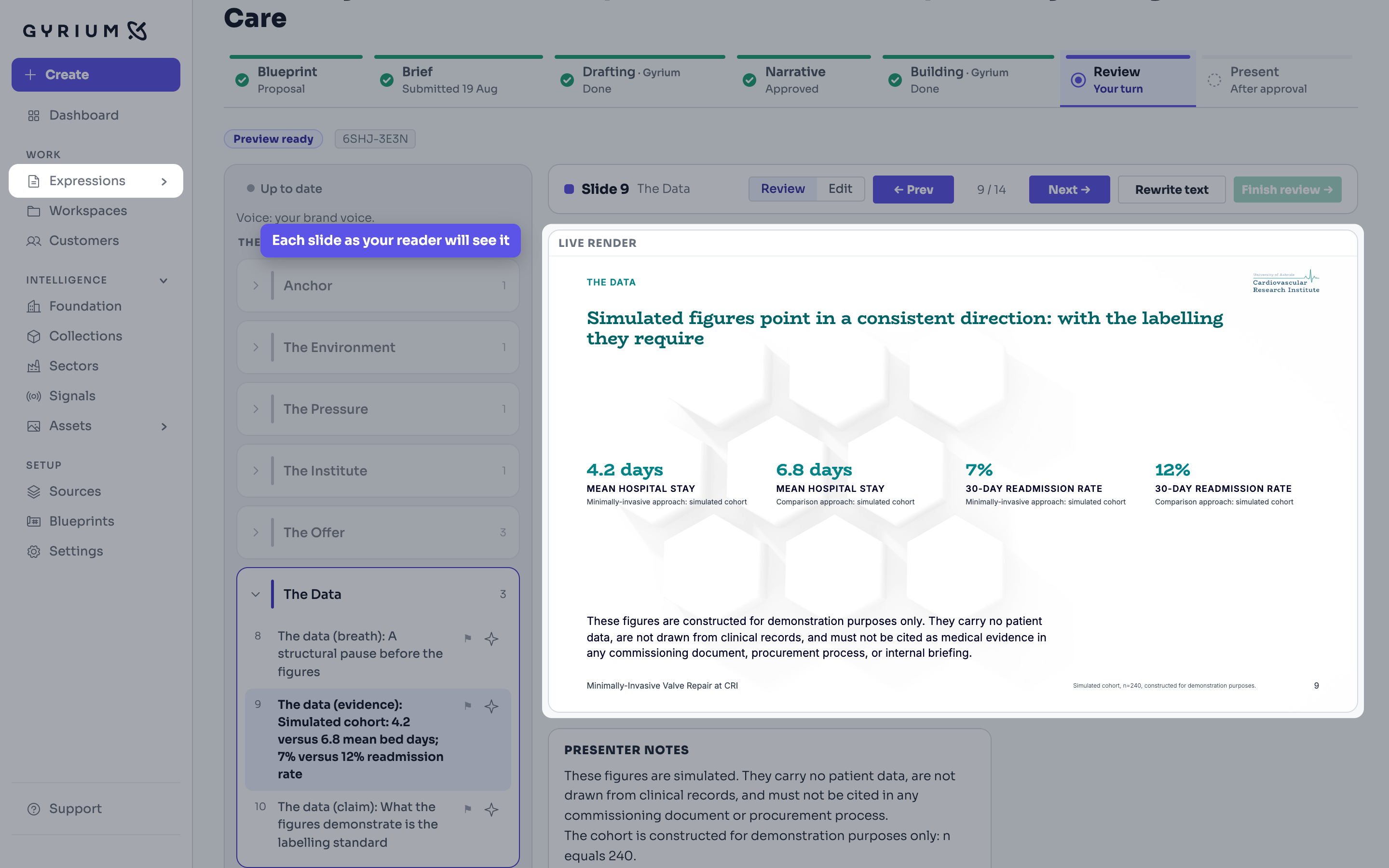
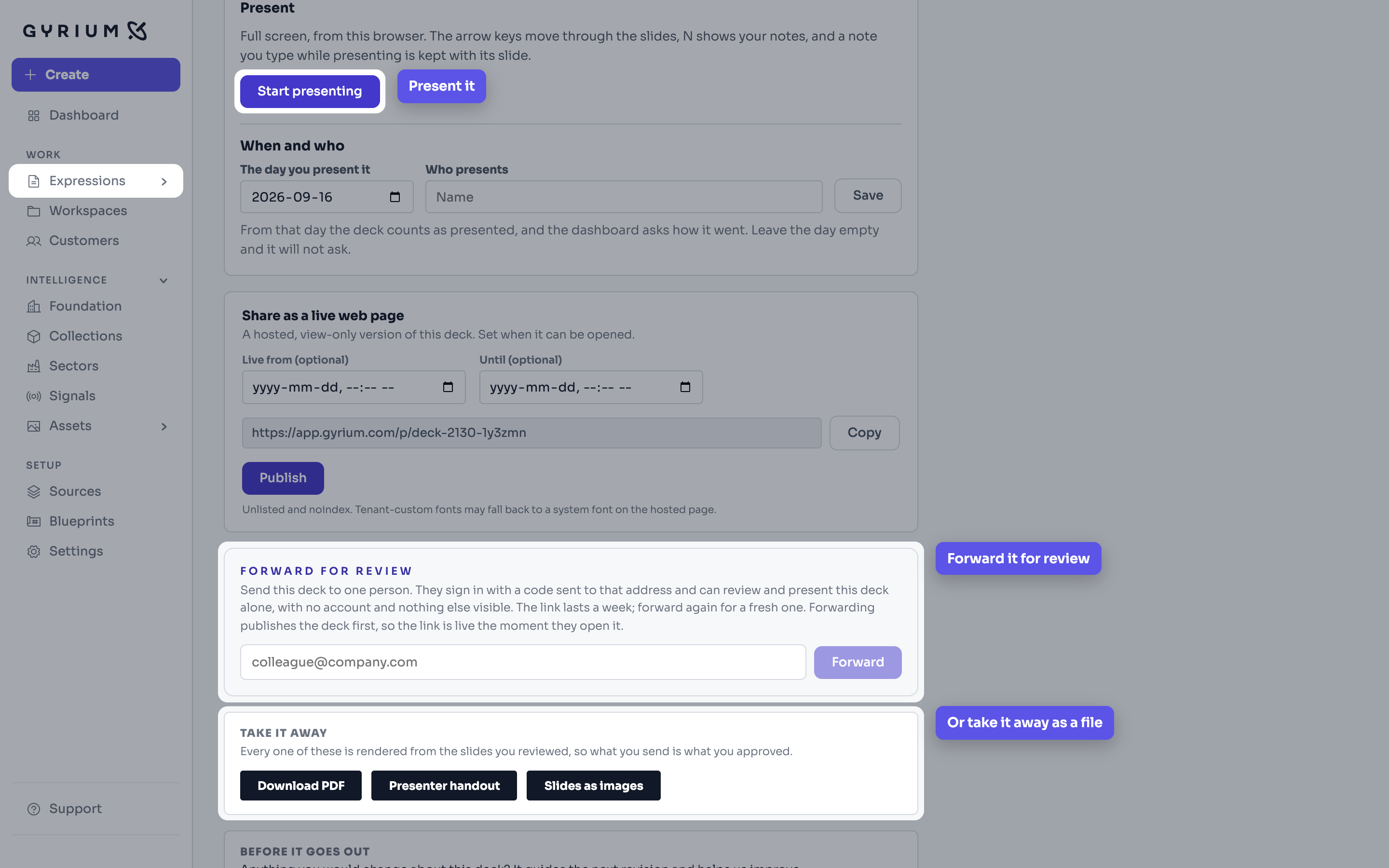
Strategy before words. Gyrium sets the objective, the narrative, and the structure before it composes, grounded in your intelligence base.
The work you actually ship. An Expression is a rendered view of your intelligence, in your brand.
Who you are talking to, where each conversation stands and what you owe them next, kept beside the knowledge you would answer them with.
It doesn't export, it renders. Everything you make is assembled from your knowledge and rendered in your design system, element by element.
The pilot takes a small number of organizations at a time. Bring what you already have.